The Best Trip Is Sometimes the One Right Outside Your Door
We've driven Highway 1 more times than we can count. Living in Arroyo Grande, the stretch between Pismo Beach and Cambria is practically our commute. Morro Rock has been in our rearview mirror for twenty years. We've pointed at it from the car — "classic shot," one of us would say — and kept driving north toward somewhere we thought was more worthy of stopping for.
Last spring, we finally stopped.
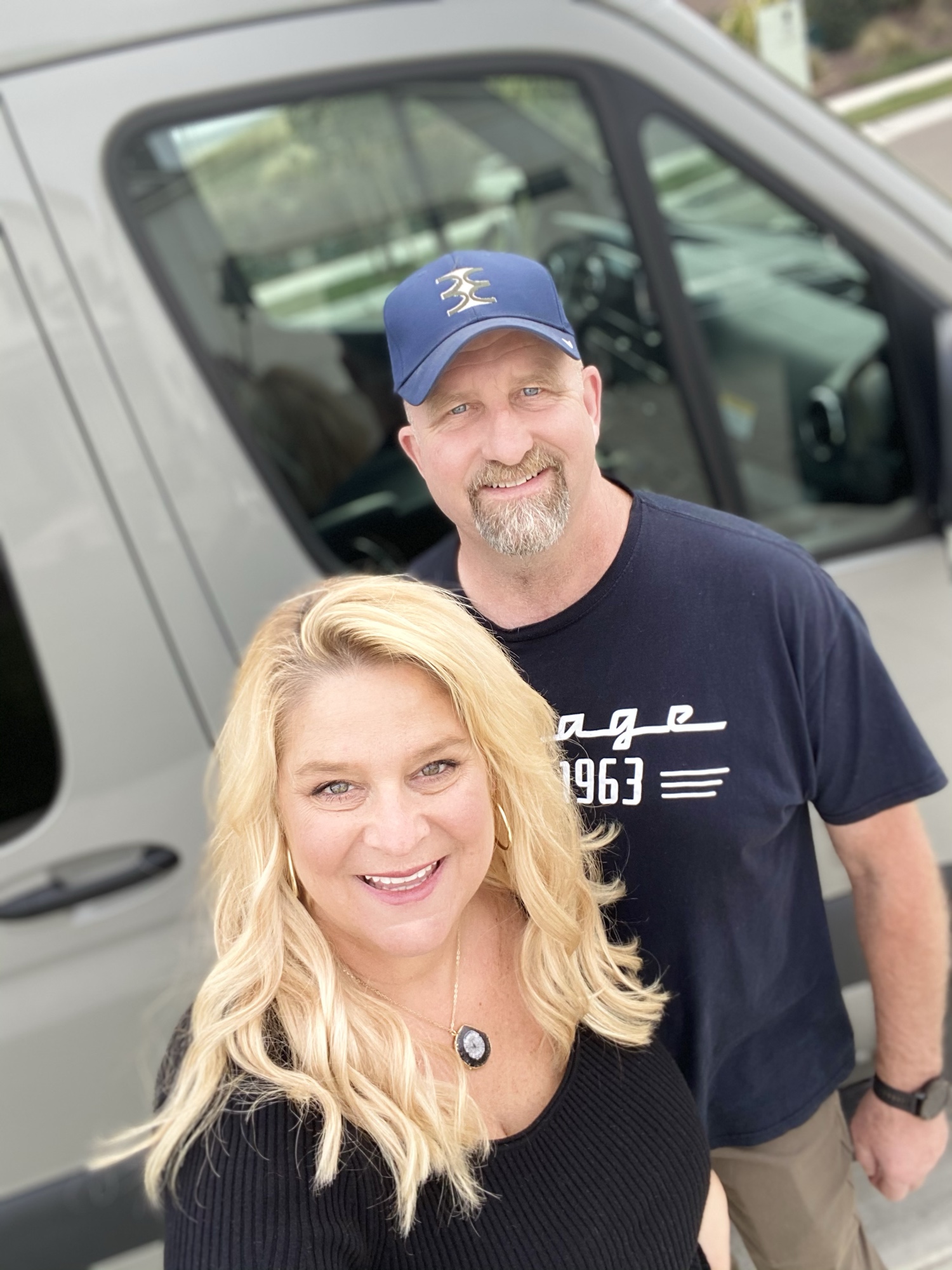
Ernie had a hunch. We had a free Friday, Maverick was already packed from a camping trip we'd postponed twice, and the weather was cooperating in the way the Central Coast does in May: cool mornings, bright afternoons, that particular sea-salt light that makes everything look a little more cinematic than it is. We pulled off at Morro Bay State Park with no reservations and no plan. We did the whole loop — Morro Bay, Cambria, back down through Pismo — in two nights and spent less than $300 for the two of us.
As locals, we'll be honest: we felt a little embarrassed that it took us this long. This is our backyard. Here's everything we'd tell a friend who's planning it right.
Morro Bay: The Rock, the Harbor, and Seriously Good Seafood
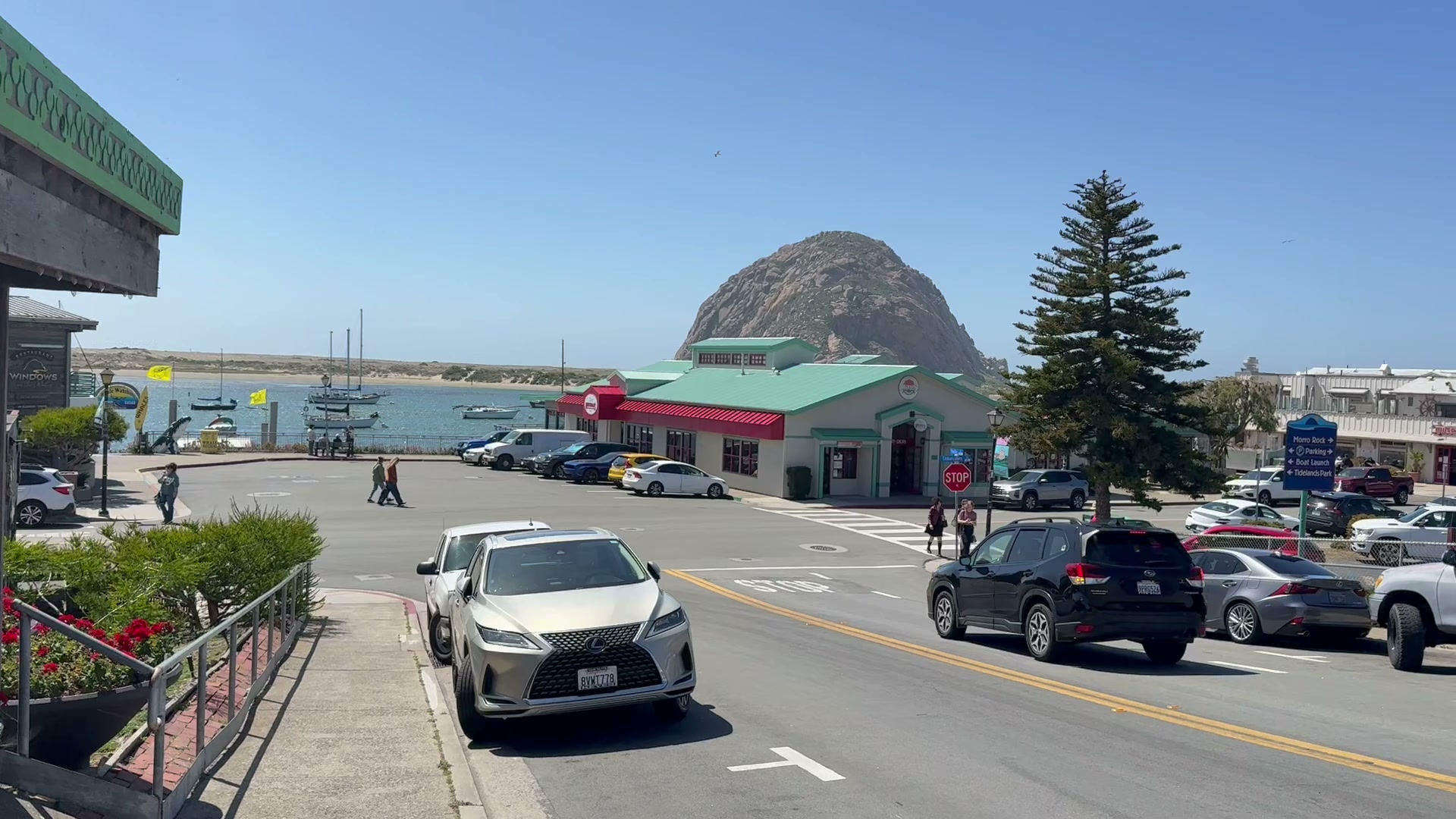
Park near the State Park campground or anywhere along the embarcadero and walk. That's the first rule of Morro Bay. The town is small, it's flat, and the waterfront is genuinely one of the more beautiful harbor walks on the California coast. Morro Rock — the 576-foot volcanic plug that's been sitting there for 23 million years — looks different from every angle, and it looks best on foot.
The embarcadero is lined with fishing boats, kayak rental outfits, and a few excellent seafood spots. We had lunch at a place on the water and split a bowl of local clam chowder and a plate of fresh Dungeness crab — the kind of meal where you don't talk much because you're both just eating. Don't skip the seafood here. This is a working harbor. The fish came off a boat this morning.
After lunch, we rented kayaks from one of the outfitters on the embarcadero and paddled out toward the sandspit — the narrow dune barrier that separates the harbor from the open Pacific. We're not kayakers in any serious sense, but an hour out there in the calm harbor water was genuinely wonderful. You can paddle right up to the sandspit, pull the kayak up on the beach, and walk to the ocean side. On a quiet weekday, you might have that stretch entirely to yourself.
For overnight, the Morro Bay State Park campground puts you right on the water — campsites book up fast in summer but were easy to grab on a Thursday in May. If you prefer a bed, there are several small motels steps from the embarcadero that are solid and fairly priced. We stayed one night in the van at the campsite (more on Maverick in a bit) and it was perfect.
The Perfect Quiet Weekend on the California Coast — our video from this exact trip.
Cambria: Moonstone Beach, Ollalieberry Pie, and One Beautifully Weird House
The drive from Morro Bay to Cambria takes about thirty minutes and every single mile of it is Highway 1 at its most dramatic. You go through Cayucos, past Harmony (population: 18), and then the road starts climbing and winding above the ocean in that way that makes you instinctively slow down regardless of what the speed limit says.
Cambria is a small town that gets it right. It has two things that are worth building a detour around: Moonstone Beach and Linn's.
The Moonstone Beach boardwalk is a flat, paved path along the bluff above the ocean. You'll walk through wind-sculpted Monterey cypress trees, past tide pools, and over stretches of beach where the actual moonstones — smooth, milky agates — wash up with the tide. We walked the full length (about 1.5 miles one way) and found it hard to hurry. This is not a power-walking situation. Bring coffee and take your time.
Linn's is the ollalieberry pie situation, and if you've never had an ollalieberry, this is your day. The ollalieberry is a cross between a loganberry and a youngberry, and it exists almost exclusively on the Central Coast. Linn's has been making pies from them since 1978. Get a slice. Get a whole pie if you have a cooler in the van (we did). The jam is also exceptional and makes a genuinely good gift that fits in any luggage.
Downtown Cambria's Main Street is short and walkable with good wine bars, a used bookstore, and the kind of gift shops that actually sell interesting things. Don't miss it.
If you like genuinely weird history — and we do — drive up to Nitt Witt Ridge before you leave. Arthur Harold Beal, a local trash hauler, spent 51 years building a hillside house out of garbage: abalone shells, car parts, beer cans, driftwood, and salvaged tile. It's now a California Historic Landmark and one of the stranger things you'll see on the coast. Tours are available by appointment; walking up and looking at the outside is free.
Pismo Beach: Golden Hour at the Pier, Chowder, and the Dunes
Pismo gets a reputation as a spring break town because, for a few weeks a year, it is. But outside of that window — and especially in the shoulder season — Pismo Beach is easy and genuinely fun. The pier is one of the better pier walks on the California coast, and at golden hour, when the light hits the water at that low angle and everything goes orange-pink, it's legitimately beautiful.
Splash Café on Pomeroy Avenue is not a secret. There will be a line. Do not skip it. Their clam chowder in a sourdough bread bowl is the one that all the other clam chowder bread bowls on the California coast are being compared to. We've eaten it twenty times. We had it again on this trip. It holds up. Get the full bowl, not the cup.
The Oceano Dunes are worth an afternoon if you've never been. The Guadalupe-Nipomo Dunes complex is one of the largest coastal dune systems in California — tall, rolling, and surprisingly quiet once you get away from the OHV area. You can walk up into the dunes from several access points near Oceano and have the feeling of being somewhere genuinely remote while you're twenty minutes from a good pizza place. We walked up to a high ridge as the sun was going down and sat there for a while without saying much. Good kind of quiet.
Shell Beach, just north of Pismo proper, is worth a stop for the tidepooling. The rocks are full of sea stars, anemones, and hermit crabs at low tide, and the neighborhood is quieter than Pismo's main beach. Walk down from the street-end access points.
The Budget Breakdown: A Full Weekend Under $300 for Two
Here's the honest math from our trip. We're not budget travelers in the extreme sense — we didn't pack every meal or sleep in a parking lot — but we also weren't extravagant.
Friday night: Morro Bay State Park campsite, $35. We had the van, so it was essentially just the campsite fee with all our gear already on board. If you're in a tent or a motel, add another $30–60 for a budget motel room near the embarcadero.
Saturday night: A small motel on the north end of Cambria, $119 for the night. We've paid more for worse in San Francisco.
Food: Lunch in Morro Bay (seafood, splitting dishes), $42. Linn's pie and lunch in Cambria, $28. Splash Café chowder, $22. Dinner Saturday at a Cambria wine bar, $54. Sunday breakfast at a Pismo diner, $24. Total food: about $170 for both of us over the full weekend.
Gas: The whole loop from Arroyo Grande is under 100 miles. We were already in the van. Call it $25.
Kayak rentals: Two hours for two people, $40.
Total: Right around $290. That's a full two-night weekend — real meals, a real motel, an actual activity — for less than a single night at most hotels in San Francisco. If you're coming from farther away, add your gas, but the math still works.
The Maverick Factor: What the Van Changes
We want to be honest about how doing this trip in the Sprinter changes things, because some of what made it great was simply that we live in Maverick for the weekend and it becomes a different kind of trip.
We have our own pillows. This sounds small until you've spent enough nights in motel beds with flat pillows. We have a French press and good coffee, so we woke up Saturday morning at the Morro Bay campsite, made coffee in the van, and sat outside with the harbor in front of us for an hour before doing anything. That hour cost us nothing and was probably the best part of the trip.
We also have a cooler stocked from home — snacks, wine, leftovers, the ollalieberry pie from Linn's. When you're not hungry-and-buying every few hours on the road, you make better decisions about where you actually spend money on food. We only ate at places we genuinely wanted to eat at, not just the first thing that appeared when we got hungry at 2pm.
The freedom piece is real too. We can park at a trailhead and not worry about being back anywhere by a certain time because the van is wherever we are. We don't have a hotel to check into or out of on a schedule. The Central Coast is a particularly good place for this because the good stuff — the beaches, the dunes, the bluff walks — is all outside anyway.
If you're doing this in a regular car, it's still a great trip. But if you've been on the fence about the van life experiment, this is a good argument for it.
Best Time to Go: September and October Win Every Time
We've done the Central Coast in every month of the year. Here's the truth: summer is the worst time, and not because of the weather. The weather in summer on the Central Coast is actually often mediocre — marine layer, fog, temperatures in the low 60s through July. The problem is the crowds. Pismo in July is a parking situation. Morro Bay embarcadero on a summer Saturday is a crowd situation.
September and October are the sweet spot. The marine layer burns off earlier and more reliably. Temperatures are genuinely warm — low-to-mid 70s most days. The crowds drop off sharply after Labor Day. Campsite reservations are actually available without booking four months in advance. The light in October on the coast is extraordinary — that low-angle autumn sun makes everything glow.
May is also good, which is when we went. The shoulder season on either side of summer (April–May and September–October) gives you the coast at its best without the summer circus. Avoid holiday weekends in any month. Come on a Thursday if you can manage it and you'll have the embarcadero mostly to yourself.
This is our backyard, and it took us too long to actually stop and spend time in it. Don't make our mistake. The Central Coast is one of the most genuinely beautiful stretches of coastline in the country, and most of its best things are free or cheap. You don't need a big trip to have a great one.