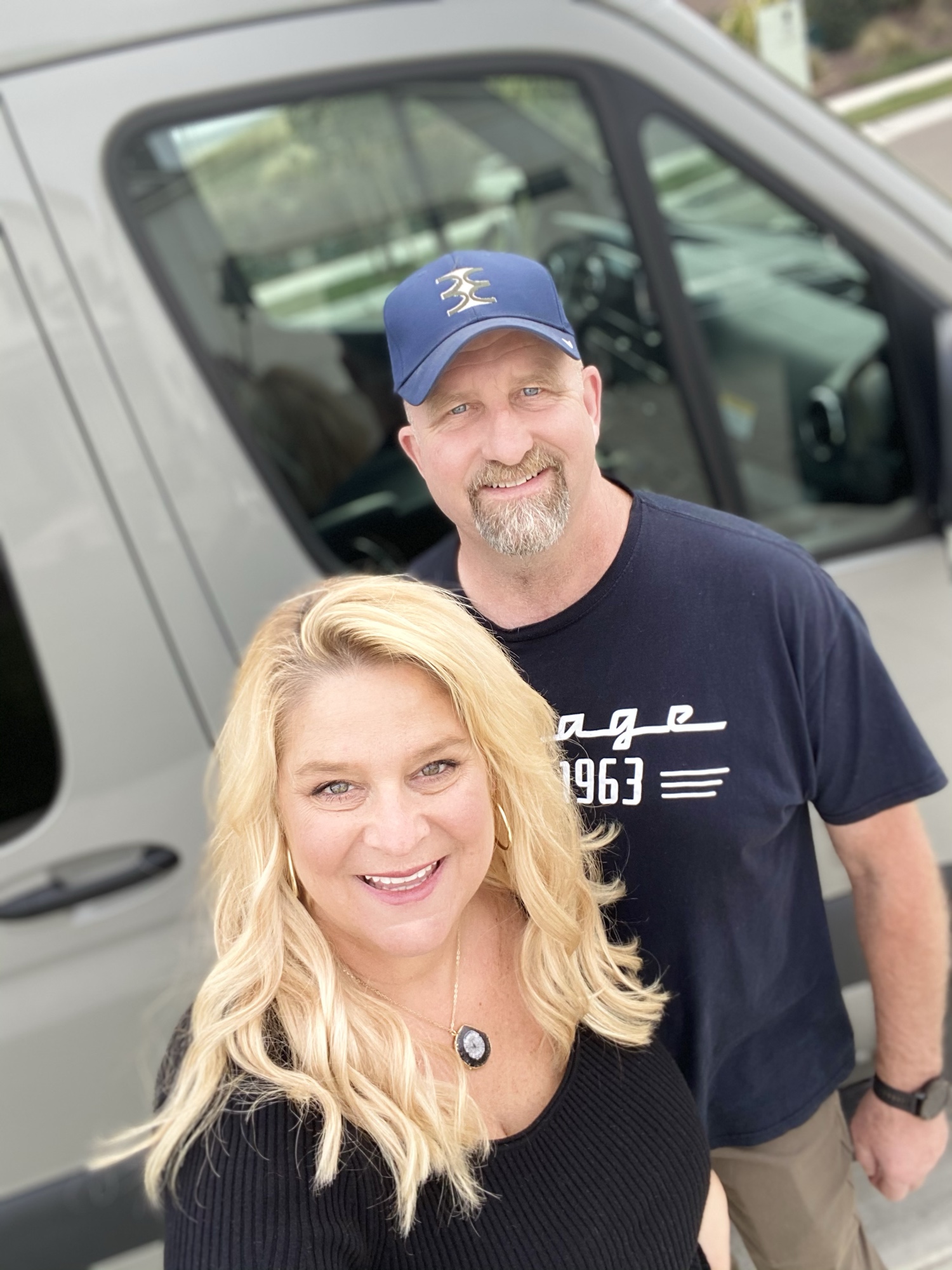
We've been planning the Maverick build for years. A 2021 Mercedes-Benz Sprinter 144, high roof, converted by us over about eight months in our driveway in Arroyo Grande. We watched every YouTube video, read every forum thread, joined every Facebook group. We thought we were prepared.
We were not prepared.
Not in a disaster way — nothing caught fire, nobody ended up stranded on a dirt road crying (well, almost). But the gap between planning a van trip and actually living inside one is wider than any build spreadsheet can capture. These are the ten things we wish someone had told us before we turned the key and pointed Maverick north for the first time.
Reservations Matter More Than You Think
Every van life video makes it look like you just roll up to some scenic meadow, crack a beer, and watch the sun go down. Nobody shows the part where that meadow has been fully booked since February. We learned this the hard way trying to snag a campsite along Big Sur — Pfeiffer Big Sur State Park, Kirk Creek, Plaskett Creek. All of it. Gone. We spent two nights that first trip bouncing between a Walmart parking lot and a noisy pullout on Highway 1 because we assumed dispersed camping was everywhere and first-come sites were always available.
The reality: summer weekends on the California coast are competitive in a way that would shock you. Reserve 6 months out for the popular spots, have a backup list, and know where dispersed BLM land actually is before you leave the driveway — not after you've been driving for four hours.
Everything Takes Twice as Long
Setting up camp: 45 minutes. Cooking dinner: an hour. Finding the trailhead with parking that actually fits a Sprinter: 30 minutes of circling. Getting packed up in the morning: somehow also 45 minutes even though you just unpacked. We had planned our first week like we were on a regular road trip — drive here, see this, drive there. By day three we were perpetually behind, slightly stressed, and eating granola bars for dinner because we'd run out of time to cook.
Build buffer time into every single day. Then add more buffer. The van life pace isn't slow because people are lazy; it's slow because everything has a process, and processes take time. Once we accepted that, the trip actually became enjoyable.
The "Fits in a Sprinter" Problem Is Real
We both packed like we were going on a two-week international trip with luggage fees. Jill had three pairs of boots. Ernie brought his good chef's knife, his backup chef's knife, and a wok. The wok lasted exactly one night before we accepted it was never going to fit anywhere functional. By week two, we had mailed a box of stuff home and still felt slightly claustrophobic.
What we landed on: a capsule wardrobe for each of us (7 days, mix-and-match, one pair of nicer shoes for restaurants), two cast iron pans that stack cleanly in the storage drawer, and one truly excellent chef's knife. That's it for the kitchen. You think the constraints will feel limiting. They don't — they feel freeing, once you get past the initial grief of leaving the wok behind.
Cell Service Is a Lie
We have T-Mobile. T-Mobile assures us we have coverage in many of the places we like to go. T-Mobile is an optimist. The moment you turn off a paved road heading toward anything interesting — a canyon, a coast, a forest — you will lose signal with a speed and totality that is almost impressive. We got mildly lost twice in the first month because we were trusting a live navigation app that was quietly not loading.
Download your offline maps before you leave. Google Maps offline works well for most road navigation. Gaia GPS is essential if you're doing any dispersed camping or hiking. Download your podcasts, your Netflix episodes, your audiobooks. Assume you will have no streaming capability for stretches of 24 to 48 hours at a time. When you plan for no service, you stop being surprised and annoyed by no service.
Rain Is Not Romantic in a Van
Rain on a van roof sounds like the inside of a snare drum. It's loud in a way that is impressive the first night and deeply exhausting by the second. Beyond the noise, there's condensation — every cold surface in a Sprinter becomes a moisture collector, and if you're not running the fan and managing airflow, you wake up to windows fogged on the inside and a slight dampness on everything that doesn't fully go away.
A rainy afternoon at home means books on the couch, a pot of soup on the stove, the dog asleep at your feet. A rainy afternoon in 80 square feet means two people trying not to have the same conversation twice, nowhere to spread out, and the realization that you did not download enough shows. We now have a "rainy day protocol": a good thermos of tea, a downloaded movie we've been saving, and a policy of not blaming each other for the weather.
The Community Is Real and Amazing
This one surprised us in the best possible way. We'd heard about the "van life community" the way you hear about anything online — with mild skepticism and a mental footnote about how curated social media is. But the actual community on the road is genuine. Van lifers wave at each other. They share campsite tips in parking lots, leave notes on trail condition boards, and stop to check in when they see someone who looks stuck.
Our favorite van friends — a retired couple from Bend, Oregon, in a blue Transit they'd been living in for two years — we met at a rest stop near Paso Robles. They knocked on our door at dusk to warn us about a noise ordinance in the area, stayed for three hours, and texted us campsite recommendations for the next month. We would never have met them in any other context. That's the whole point.
Maverick Needs Regular Maintenance
A breakdown 200 miles from home is not the same as a breakdown in your neighborhood. This is obvious in theory and startling in practice. We had a slow leak in one rear tire that we caught only because we happened to check tire pressure before a long stretch of highway. We also let the Maxxair fan filter get clogged enough that it started running louder and less effectively — a small thing that took fifteen minutes to fix once we looked it up, but that we'd been ignoring for two weeks because van life had made us lazy about maintenance.
Before every trip, we now run a checklist: tire pressure and visual inspection on all four tires, oil level, coolant, wiper fluid, roof fan filter, house battery charge. It takes twenty minutes. The Sprinter is a remarkably reliable van but it is not indestructible, and the more you ask of it, the more you owe it in upkeep.
You Will Argue About Heat and Cold
Ernie runs hot. Always has. He sleeps with the window cracked in January and considers 68 degrees a pleasant sleeping temperature. Jill runs cold and would, if left to her own devices, keep the van at a temperature more appropriate for baking bread. This was a known couple dynamic before the van. What we underestimated was how much closer together a van makes you — there is no "going to the other room." You share exactly the same air temperature at all times.
After a few genuinely tense nights, we landed on a system: sleeping bag liners for Jill (adds about 15 degrees of warmth), the small Mr. Heater Buddy running for about 20 minutes on cold mornings before anyone gets out of bed, and a mutual agreement that the vent fan is always Ernie's call between the hours of midnight and 6am. It mostly works. We renegotiate seasonally.
Cooking in the Van Is Actually Wonderful
Once you stop fighting the constraints and start working with them, van cooking becomes one of the real pleasures of the trip. You can't do anything that requires extensive prep, multiple pots, or more than two burners — so you stop trying. You cook the way good cooks actually cook: simply, with good ingredients, and with patience.
Our current rotation of go-to meals: one-pot pasta with whatever vegetables we picked up at a roadside farm stand, cast iron tacos with pre-seasoned ground beef that we prep at home and freeze in portions, and a cast iron frittata that uses up any leftover vegetables and feeds us for two breakfasts. Every single morning, regardless of where we are or how the trip is going, the first thing we do is make a good thermos of pour-over coffee. Having that cup of coffee waiting when you unzip the sleeping bag — that small ritual is worth more than any gear upgrade we've made.
It Changes How You Travel
This is the one we didn't expect and the one that made everything else worth it. When you're in a van, you stop rushing between destinations because the van is the destination. You find a campsite at a trailhead and stay an extra night because the light is beautiful and there's nowhere else you need to be. You drive twenty miles out of your way because someone at the last rest stop mentioned a viewpoint that wasn't in any guidebook.
We have spent years traveling the way most people travel — the itinerary, the reservations, the five days in the city with a list of restaurants. There's nothing wrong with that. But the van introduces a pace that is fundamentally different, and once you've felt it, it's hard to give back. You become a little less interested in maximizing and a little more interested in being where you are.
Our Favorite Maverick Moment (So Far)
We were camped at Point Reyes National Seashore on a Tuesday in early March. We'd gotten lucky with a last-minute cancellation at the Wildcat campground — a site you can only reach by hiking or biking in, which meant nobody drove up and surprised us. We woke up before sunrise to fog so thick you couldn't see twenty feet in any direction. The whole world was white and quiet and smelled like salt and eucalyptus.
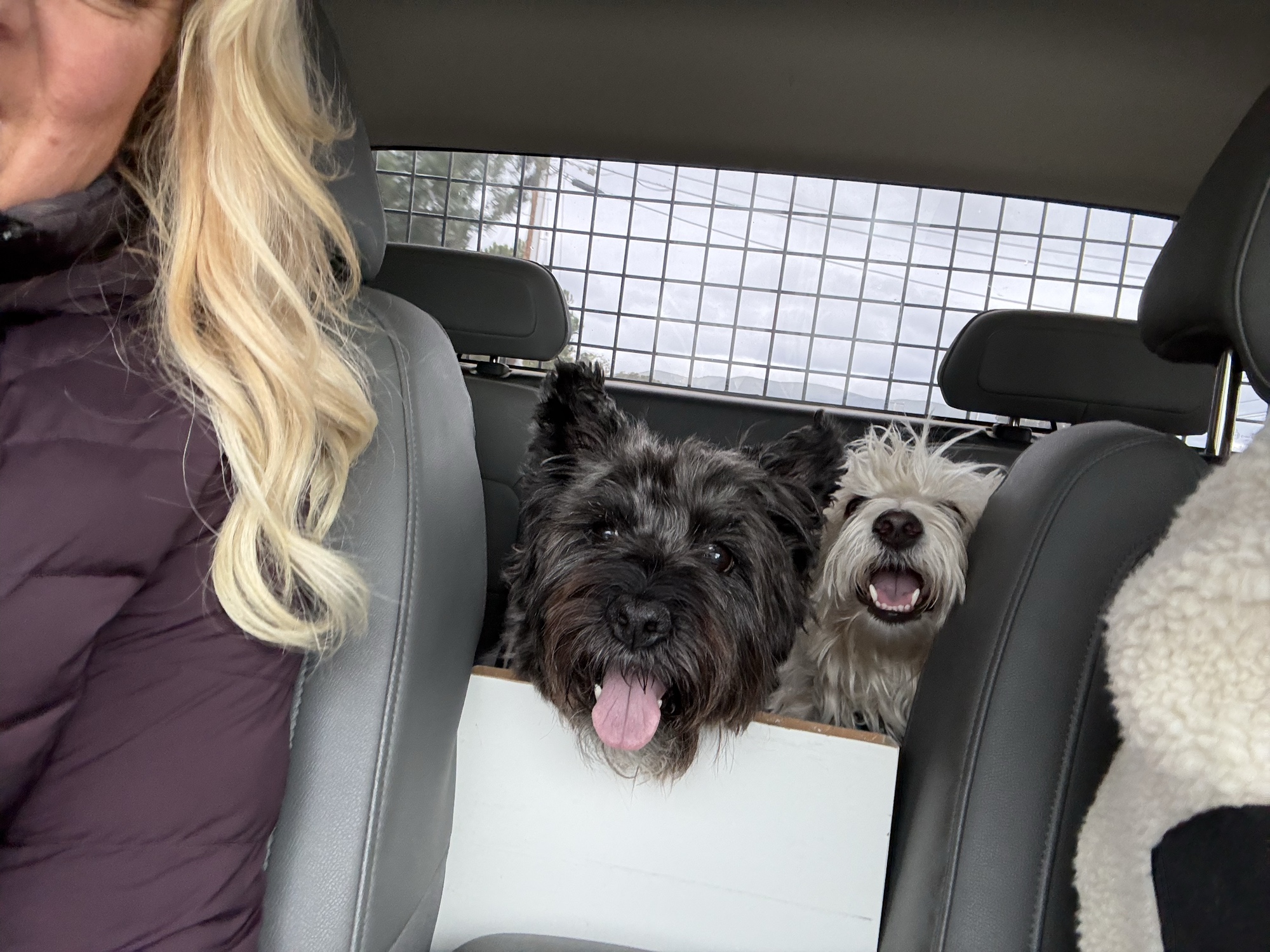
We made coffee. We sat outside in our camp chairs with the sleeping bags wrapped around us, the dogs at our feet, and nobody else around for as far as we could see (which wasn't far, but still). We didn't talk much. There wasn't anything to say. That morning is the whole reason we built Maverick.
We're still figuring it out, trip by trip. If you want to follow along, we share updates on YouTube and Instagram — the real stuff, not just the pretty sunsets. Come find us.